
A camera with a GPS facility can store coordinates information in the header of each photograph taken, if the facility is enabled. You can harvest information about someone’s location at the time a picture was taken that you can build on to establish a bigger picture of their movements and activities.

Of course, there are more obvious ways of using over-exposed location data criminally, such as those services that tell burglars that you’re in a Starbucks 2,000 miles from home. ESET’s David Harley elaborates in SC Magazine.

Plenty more (potential) phish in the C:\
David Harley also digs deeper into phishing potential of recent data leaks. While it’s not good news if and when bad people get the names and email addresses of prospective victims, there are all too many ways for that sort of information to leak. The Epsilon breach was more significant if the perps were able to link the potential victim to a particular institution, thus enabling them to target more accurately.
Coreflood botnet down
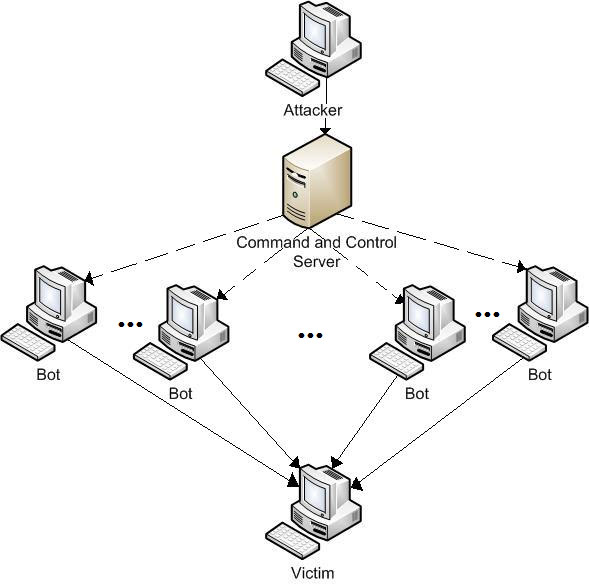
Here’s a little information from ESET’s point of view about the Coreflood botnet, whose C&C (Command and Control) servers were taken down yesterday by the Department of Justice [http://www.justice.gov/opa/pr/2011/April/11-crm-466.html]. The Coreflood bot is detected by ESET products as Win32/Afcore and has been active since the early years of the last decade (certainly since 2001), though our statistics indicate particularly strong activity between 2007 and 2009, peaking dramatically around the end of 2008. It has been relatively quiet (in terms of infection volume). It has shown a moderate upward trend in recent months, so this takedown may be particularly well-timed.
However, the significance of Coreflood doesn’t lie in its size. Its forte has been financial fraud and general password-stealing (credit cards, banking, email and social media credentials) rather than high-volume, high-visibility spamming or DDoS attacks: if anything, it was intended to stay below the radar as much as possible. Generally, then, the consequences of the takedown won’t be obvious to most people: we don’t expect to see a dramatic dip in spam volumes, and the potential victims who’ll now be spared its intentions won’t be aware that they’ve been spared. In any case, botnets are like buses: there’ll be another one along in a minute.
 ESET Ireland
Fantastic!! Thank you for your stuff on the review CyberThreats Daily: Your smartphone might be giving away more info than you really want to share | esetireland, they seem to be highly handy!
I appreciated checking out your post!!