Nymaim rides again in 2016 and reaches Brazil

During the first half of this year, ESET has observed an increase in the number of detections of Nymaim, a long-known malware family whose prevalence has fallen markedly since 2014. Back in 2013, WeLiveSecurity published a series of articles about this malware, in which we describe its kill chain and evasion techniques, as well as the … More Nymaim rides again in 2016 and reaches Brazil

Monthly Threat Report: May 2016

Analysis of ESET LiveGrid®, a sophisticated malware reporting and tracking system, shows that the highest number of detections this month, with 8.40% of the total, was scored by JS/Danger.ScriptAttachment. 1. JS/Danger.ScriptAttachment Previous Ranking: 3 Percentage Detected: 8.40% JS/Danger.ScriptAttachment is a generic detection of suspicious e-mail attachments. 2. JS/TrojanDownloader.Nemucod Previous Ranking: 2 Percentage Detected: 6.71% JS/TrojanDownloader.Nemucod … More Monthly Threat Report: May 2016

Beyond TeslaCrypt: Crysis, a new ransomware family lays claim to parts of its territory

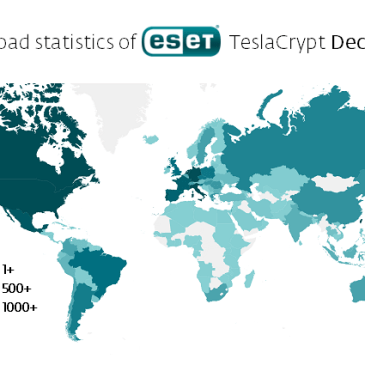
It has been two weeks since ESET created a TeslaCrypt decryptor, which allows victims of the ransomware to get their files back. This came on the back of its developers ceasing operations. Since then, over 32,000 users around the globe have taken advantage of this opportunity and downloaded the tool. But even with TeslaCrypt abandoning its territory, … More Beyond TeslaCrypt: Crysis, a new ransomware family lays claim to parts of its territory

Analysis of the Locky infection process

In recent months, there has been a significant increase in the number of networks and users affected by ransomware known as Locky, which is used to encrypt a victim’s files and then demand a ransom to be paid in bitcoins. But, how does this threat manage to infiltrate computer systems and hijack data? From the ESET Research Lab in … More Analysis of the Locky infection process

New self-protecting USB trojan able to avoid detection

A unique data-stealing trojan has been spotted on USB devices in the wild – and it is different from typical data-stealing malware. Each instance of this trojan relies on the particular USB device on which it is installed and it leaves no evidence on the compromised system. Moreover, it uses a very special mechanism to protect … More New self-protecting USB trojan able to avoid detection