New tool helps companies assess why employees click on phishing emails

NIST’s tool can help organizations improve the testing of their employees’ phish-spotting prowess. Researchers at the US National Institute of Standards and Technology (NIST) have devised a new method that could be used to accurately assess why employees click on certain phishing emails. The tool, dubbed Phish Scale, uses real data to evaluate the complexity and … More New tool helps companies assess why employees click on phishing emails

Emotet strikes Quebec’s Department of Justice: An ESET Analysis

The cyber attack affects 14 inboxes belonging to the Department of Justice was confirmed by ESET researchers.  ESET’s team of malware researchers in Montreal, in collaboration with journalist Hugo Joncas, helped shed light on a cyber attack that affected the Quebec Department of Justice.  Indeed, on August 11 and 12, the Department of Justice suffered a cyber attack in which malicious actors used malicious software to infect 14 inboxes under the Department‘s … More Emotet strikes Quebec’s Department of Justice: An ESET Analysis

5 ways cybercriminals can try to extort you

What are some common strategies cybercriminals employ in extortion schemes and how can you mitigate the chances of falling victim to a cyber-shakedown? When it comes to coercing people into parting with their money, cybercriminals seem to have an endless bag of tricks to choose from. There are some tricks, that they favor more than others, … More 5 ways cybercriminals can try to extort you

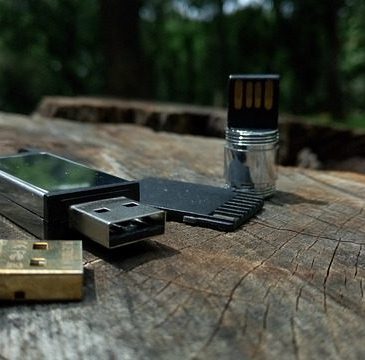
Plugging in a strange USB drive – What could possibly go wrong?

While wanting to return a found USB flash drive is commendable, you should avoid taking unnecessary risks, lest your device get infested and your data compromised. External data storage devices have been around almost as long as computers have existed. Magnetic tape and floppy disks, which were once the dominant media, are now mostly fond … More Plugging in a strange USB drive – What could possibly go wrong?